
Halloween SFX Makeup: How the Pros Create It
If you want to create Halloween SFX makeup that actually convinces, from easy ideas to a proper kit, this will point you the right way. Every October the internet fills with cuts, scars, rotting flesh and full creature transformations, and most of it is special effects makeup. The gap between a fun home attempt and a properly convincing look is technique, and a little of it goes a long way. This guide explains what Halloween SFX makeup really involves, what you can create, and how the professionals approach it. By the end you will understand why a few simple principles separate a look that genuinely unsettles people from one that fools nobody, and where to go if you want to take it seriously.
Want to see how it all works in person? A visit lets you look around the studios and meet the tutors before you commit to anything.
What is SFX makeup?
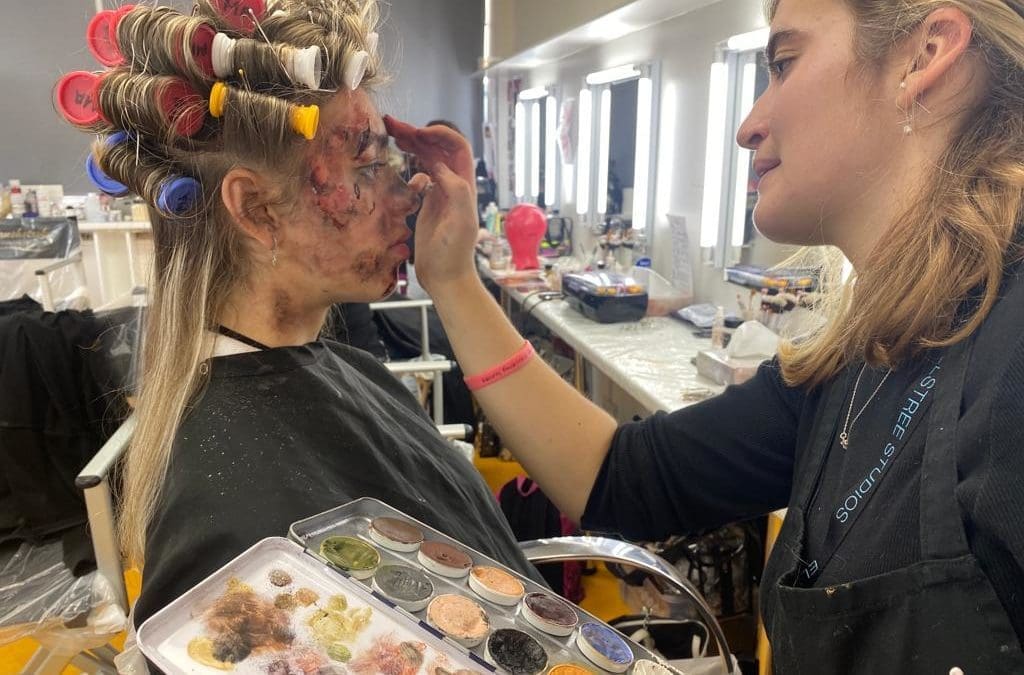
Special effects makeup, or SFX, is the craft of changing how someone looks beyond ordinary makeup, from a believable wound to an entirely new face. It blends colour work, sculpting, prosthetics and a good understanding of how skin, bruising and injury actually behave. Halloween is where most people meet it, but it is the same discipline used across film, television and theatre, which we explain in what special effects makeup involves.
What makes SFX look real instead of fake?
The line between a look that genuinely unsettles people and one that reads as a costume is almost never about the products. It comes down to a handful of principles that professionals apply without thinking and beginners tend to skip.
Colour does the heavy lifting
Real injury is a riot of colour. A fresh wound is not simply red, it carries deep maroons, blacks, raw pinks and the angry edges of irritated skin, and a bruise shifts through purples, greens and sickly yellows as it ages. Painting in flat colour is what makes a look read as fake. Layering the right tones, in the right places, is what makes a stranger wince.
Depth and dimension
Skin damage is three dimensional, so flat work never convinces. Shadows pushed into the lowest points of a wound, highlights lifted onto the raised edges, and a sense that the skin has actually been broken rather than coloured in are what give a look real depth. This is where sculpting with wax, gelatine or prosthetics earns its keep.
Edges and blending
The giveaway in amateur SFX is almost always the edges. A prosthetic or a wax build up that does not melt seamlessly into real skin announces itself immediately. Professionals spend a huge amount of their time on edges, blending and texturing the join until you genuinely cannot tell where the makeup ends and the face begins.
Restraint and the light
The hardest lesson is to stop. A little blood reads as more horrifying than a bucket of it, and an overloaded look tips from frightening into comic. It also has to convince in the conditions it will be seen in, because what looks perfect up close in a mirror can vanish under a party strobe or fall apart on camera. The most experienced artists do less than you expect and build for the light the look will actually live in.
What can you actually create with Halloween SFX?
Cuts, wounds and scars
Wounds are where most people start, and they teach the core principles fast. A convincing cut is about depth, colour and edges rather than a slick of red, built with wax or gelatine for the raised flesh, careful shading for depth, and restraint with the blood. The difference between a believable wound and a costume one is almost always subtlety.
Bruises and damage
Bruising is a lesson in colour theory. Real bruises move through reds, purples, greens and yellows as they age, and layering those tones is what makes skin look genuinely hurt rather than painted. A good bruise wheel and a light hand will take a look a long way.
Bald caps, prosthetics and texture
For bigger transformations you move into bald caps, prosthetic pieces and built up texture, which is where SFX becomes properly sculptural. Applying and blending a bald cap cleanly is a skill in itself, and one we teach in detail, including the technique behind applying a bald cap.
Blood, sweat and grime
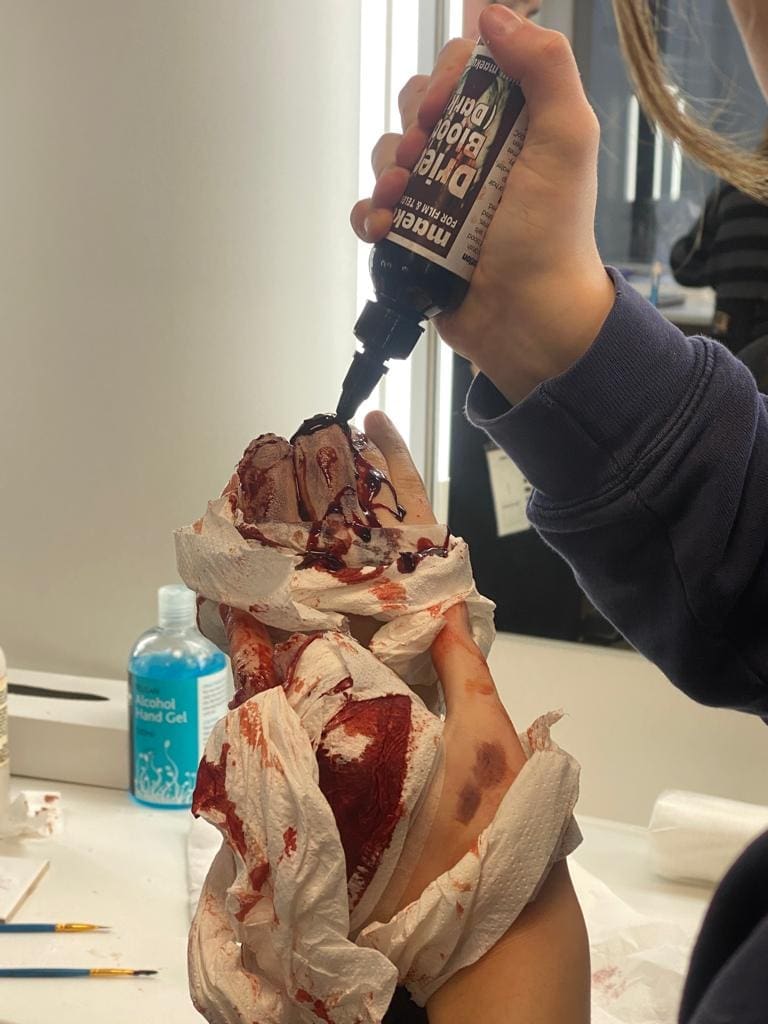
The finishing layers sell the whole thing. Different blood consistencies for fresh and dried, a sheen of sweat, dirt and grime in the right places all add the realism that makes a look read as real under light and on camera rather than just up close.
What do you need to get started?
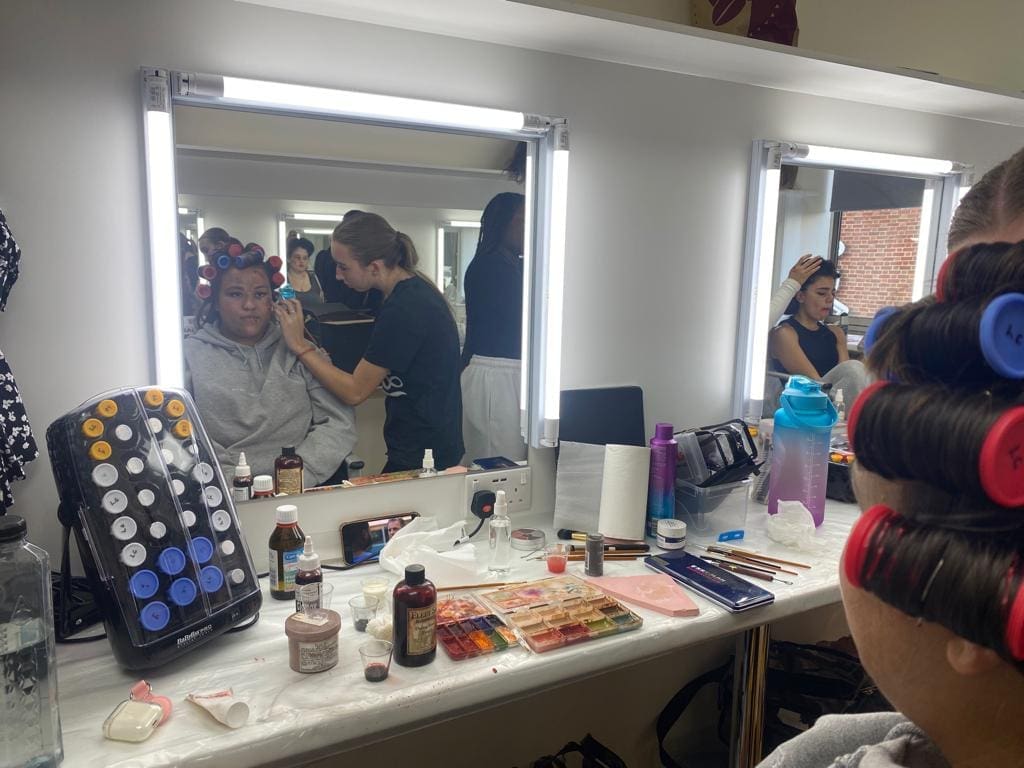
You do not need a film grade kit to begin. A starter set of cream colours, a bruise wheel, some liquid latex or gelatine, a little fake blood in a couple of consistencies, and a few sponges and spatulas will cover most Halloween looks. As with any kit, technique matters far more than how much you spend, and a small set used well beats a big one used badly.
How do professionals approach a Halloween look?
Professionals plan. They work out the story of the look, what happened to this face, before touching it, because that decides the colours, the placement and the level of damage. They build in layers, work for the light the look will be seen in, and stop before it tips into too much. Knowing when to stop is one of the hardest and most valuable instincts in the craft.

Can you turn SFX into a career?
Absolutely, and many artists do. The same skills behind a great Halloween look are the foundation of effects work across film, television and theatre, where prosthetics, wounds and transformations are everyday work. If that is the direction that excites you, our guide on how to become an SFX makeup artist sets out the path, and the special effects route shows where it leads.
How long does an SFX look take to create?
Far longer than people expect. A simple wound might take twenty minutes, but a full prosthetic transformation can run to several hours of sculpting, applying, blending and painting before a single photograph is taken, and that is before the preparation that happens out of sight. Part of becoming a professional is learning to work cleanly to a deadline, because on a real production the call sheet does not wait for art.
This is why planning matters so much. The artists who stay calm through a complex look are the ones who decided every step before they began, laid their kit out in order, and knew exactly where they were heading. Improvising your way through a three hour application is how a look and a schedule both fall apart.
None of this is meant to put you off. It is simply the reality of the craft, and it is exactly the kind of pressure proper training prepares you for, so that speed and calm arrive long before they are tested on a paid job.
Where do you learn SFX properly?
SFX rewards proper teaching more than almost any area of makeup, because so much of it is hands on technique that is hard to pick up from a screen. Brushstroke has trained makeup artists inside Elstree and Longcross studios for over thirty five years, with effects woven through the training rather than bolted on. The SFX taster is a great way to try it, and the full diploma takes it much further. Come and see the studios to get a real feel for it.
Frequently Asked Questions
How do you make a realistic fake wound for Halloween?
Build it rather than paint it. Use wax or gelatine to create raised, broken flesh, shade underneath for depth, keep the edges irregular, and add blood last and sparingly. The realism comes from depth and restraint, not from how much red you use.
What makeup do you need for Halloween SFX?
A starter SFX kit of cream colours, a bruise wheel, liquid latex or gelatine, a little fake blood and some sponges and spatulas covers most looks. Add prosthetic pieces and bald caps as you move toward bigger transformations.
Is SFX makeup hard to learn?
The basics are very learnable, and a simple wound or bruise is within reach quickly. The craft has real depth beyond that, which is why proper hands on training makes such a difference once you want to go further.
Can Halloween SFX lead to a film career?
Yes. The skills are the same ones used in film, television and theatre effects work, so a love of Halloween looks is a genuine starting point for a career in special effects makeup. Plenty of working effects artists trace their start to exactly this, a fascination with making something look real that grew into a craft and then a job. The skills transfer directly, and the main difference on a film set is the standard expected and the deadline you work to.
What are some easy Halloween SFX makeup ideas?
Simple cuts, grazes, bruises and a basic burn are the easiest convincing effects to start with, using a little wax, some blood and good colour work. Begin with one clean effect rather than a full creature, and build from there.
What goes in a Halloween SFX makeup kit?
A starter SFX kit usually has scar wax or modelling putty, spirit gum, fake blood, a setting product, an alcohol or grease colour palette and brushes. You can build convincing effects from a small kit once you know how to use each item.
How do you do Halloween SFX makeup at home?
Work clean, build effects in thin layers, and set each stage so it holds. Watch your skin for any reaction to glues and removers, and give yourself time, because rushing is what makes home effects look flat.
Is Halloween SFX makeup good practice for film work?
Yes. The wounds, ageing and creature techniques behind Halloween looks are the same foundations used on film and television, so practising them seriously is a genuine route into special effects training.
Further reading
Training into special effects makeup.
A clear introduction to SFX makeup.
Applying a bald cap, step by step.
Where makeup training can take your career.