What Makeup Qualifications Do You Actually Need?
If you are weighing up makeup artist qualifications and trying to work out which ones employers and productions in the UK actually ask for, start here. The world of makeup qualifications is genuinely confusing. ITEC, VTCT, BTEC, NVQ, HNC, diplomas and a hundred private certificates all promise to launch a career, and it is hard to tell which actually matter. This guide cuts through it, explains what each type of qualification really is, and helps you work out which route fits the career you want. It will not tell you which course to buy, but it should leave you able to tell the difference between a qualification that opens doors and a certificate that simply takes your money.
Want to see how it all works in person? A visit lets you look around the studios and meet the tutors before you commit to anything.
Do you need a qualification to be a makeup artist?
Strictly speaking, no. There is no law that says you must hold a qualification to call yourself a makeup artist or take paid work. In practice, though, a recognised qualification does three things that matter. It teaches you to a professional standard, it gives clients and employers confidence in you, and on many film, television and stage productions it is effectively expected. So while it is not legally required, going without one quietly closes a lot of doors.
What qualifications are actually out there?
ITEC and VTCT diplomas
These are widely recognised vocational qualifications, usually at Level 2 and Level 3, that cover makeup and often hair to a professional standard. They are the backbone of most serious makeup training, and a Level 3 diploma is the qualification many employers look for. Brushstroke runs an ITEC Level 3 diploma built exactly around this.
BTEC diplomas
BTEC qualifications cover similar ground with a slightly different structure and assessment style, again typically at Level 3. The two year BTEC diploma goes deeper across makeup, hair and the wider craft, which suits anyone aiming at film, television and stage rather than counter work.
HNC and HND
Higher National Certificate and Diploma qualifications, at Level 4 and Level 5, sit above the standard diplomas and move toward degree level study. The HNC and HND routes suit artists who want the deepest training and the strongest academic standing.
Short courses and private certificates
Plenty of short courses and private certificates exist, and some are excellent for a specific skill or a taster. The thing to watch is that a weekend certificate is not the same as a full diploma, and it should not be sold as one. They are a fine supplement and a poor substitute.
Which qualification is right for you?
The right route depends on where you want to end up. If you want a thorough grounding for a broad career across screen, stage and freelance work, a full Level 3 diploma in makeup and hair is the dependable choice. If you want the deepest possible training and academic standing, the HNC and HND routes go further. If you already work and want to add one skill, a focused short course makes sense. The mistake is choosing on price or length alone rather than on the career you actually want.
It is also worth thinking about hair. Screen and stage work expects makeup artists to handle hair too, so a qualification that covers both is far more useful on a real production than makeup alone.
Do employers and clients really care about qualifications?
It depends who is hiring. A bride or a private client usually cares about your portfolio and your reviews more than a certificate. A production, an agency or a salon often wants to see a recognised Level 3 qualification as a baseline of competence and professionalism. A qualification will not get you work on its own, but it opens the door, and a strong portfolio then wins the job. You can see how the pieces fit together across the different careers in makeup.
Does the school matter as much as the qualification?
Two people can hold the same Level 3 diploma and be worlds apart as artists, and the reason is usually where and how they trained. The certificate is identical. The hours of real practice, the quality of the teaching and the portfolio built along the way are not.
What you practise on matters
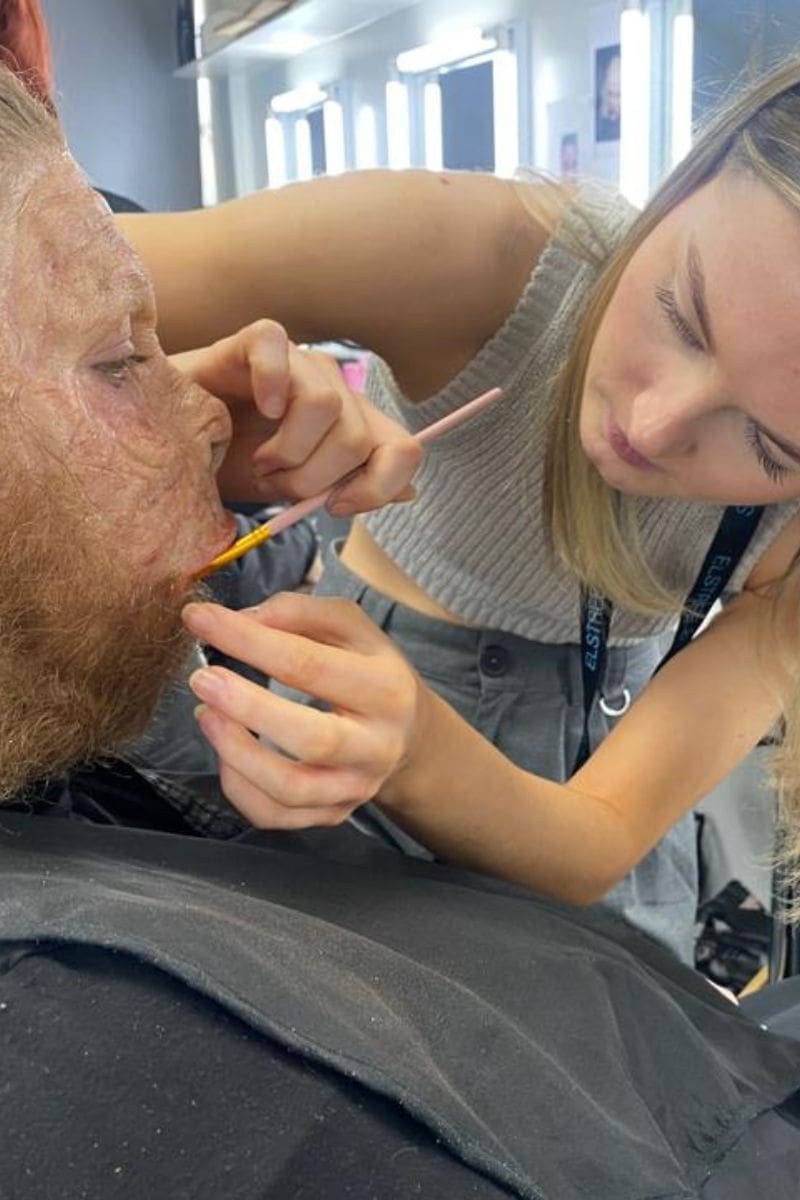
A qualification earned through constant hands on work, on real faces, in proper studio conditions, produces a very different artist from one earned mostly on paper. The best training is relentlessly practical, because makeup is a craft you learn by doing it again and again under someone who can see what you cannot yet.
The portfolio you leave with
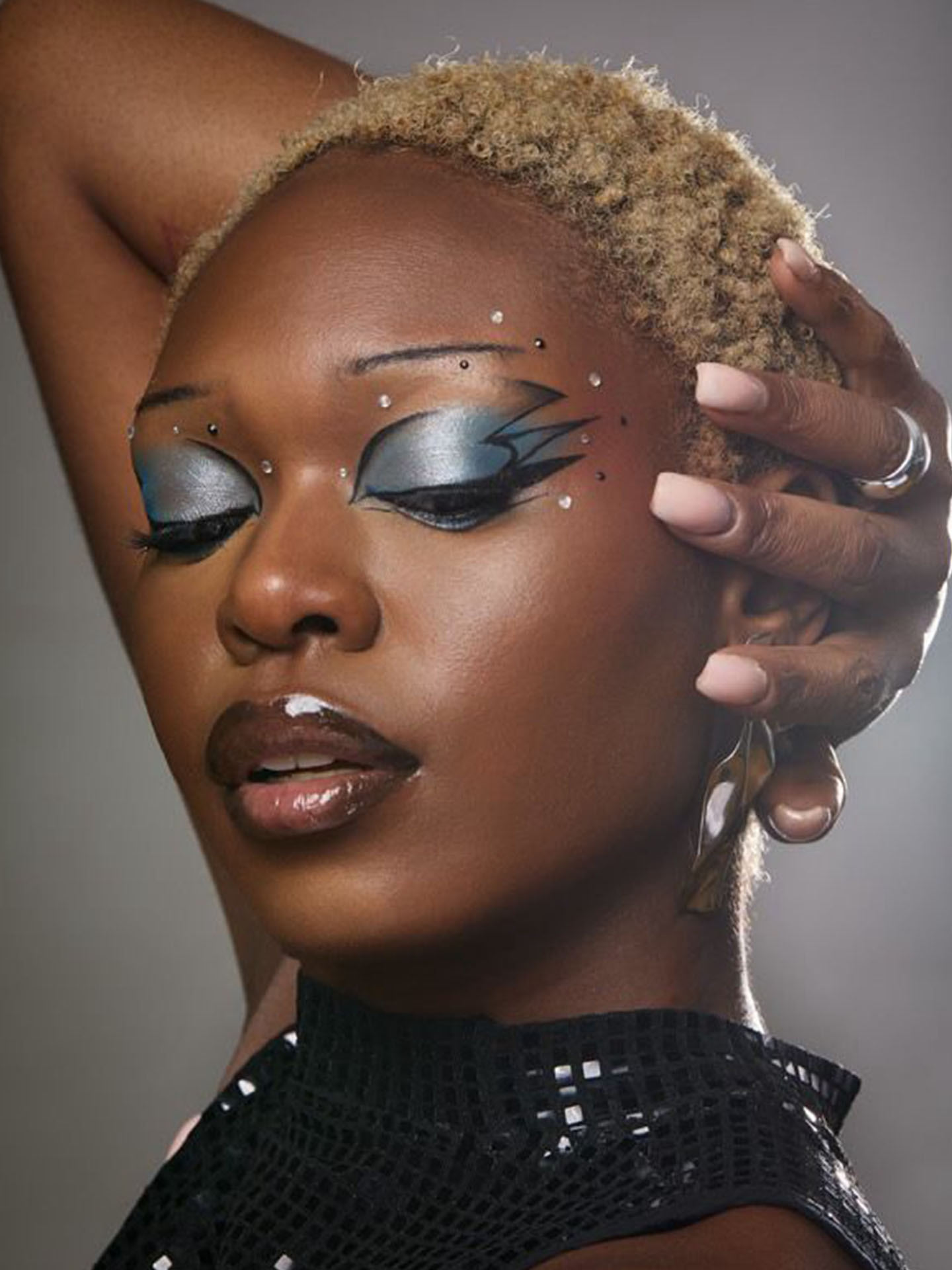
By the end of good training you should have a portfolio that gets you work, not just a certificate that proves you turned up. That body of images is often what a client or a production actually judges you on, and a course that helps you build a strong one has given you something the qualification alone never could.
The doors a school can open
A school with a long reputation and real industry links does more than teach. It connects you to the people who hire, lends you the credibility of its name, and puts you in rooms you would struggle to reach alone. In the early years that network can matter as much as anything printed on the certificate.
How much does it cost to qualify, and can you fund it?
Cost varies a lot with the level and length of the course, which is exactly why it is worth looking at properly rather than guessing. A full diploma is a real investment, but it is the investment that makes everything after it possible, and there is often funding and finance available to help. We set out the current course costs on the fees page, and the options for help on our course funding page.
Is an online makeup course as good as in person training?
Online courses can teach theory, product knowledge and the thinking behind a look, and for those things they are genuinely useful. What they cannot do is put a tutor at your shoulder while you work on a real face, correct your hand as you go, or give you the studio hours that build real speed and confidence. Makeup is a contact craft, learned by doing it under expert eyes, so the strongest training is overwhelmingly in person even when some of the theory sits online.
This matters most for the practical, high pressure areas like screen, stage and effects work, where there is no substitute for having done it for real, repeatedly, before a job depends on it. Treat online learning as a helpful supplement and a poor replacement, and judge any course by how much genuine hands on time it gives you.
If your circumstances mean online is the only option for now, choose it with eyes open and plan to top it up with real practical experience, through assisting, modelling and short in person workshops, before you rely on it for paid work.
Where does Brushstroke fit in?
Brushstroke has trained makeup artists inside Elstree and Longcross studios for over thirty five years, and our diplomas are built around the qualifications that actually carry weight in the industry. Whether the two year diploma or the 7 month diploma fits you best, the qualification comes with the studio experience and the portfolio that turn it into work. The clearest way to judge it is to come and see the place.
Frequently Asked Questions
What level qualification do you need to be a makeup artist?
A Level 3 diploma in makeup, ideally covering hair as well, is the standard most employers and productions look for. Higher levels like HNC and HND go further and suit those who want the deepest training, but Level 3 is the dependable professional baseline.
Is a makeup qualification worth it?
For most people aiming at a serious career, yes. It teaches you to a professional standard, gives clients and employers confidence, and is often expected on screen and stage. The portfolio and studio experience that come with good training are worth as much as the certificate itself.
Can you be a self taught makeup artist?
You can learn a great deal on your own, and some self taught artists do well, particularly in social and bridal work built on a strong portfolio. For screen, stage and agency work, though, a recognised qualification removes a barrier that self teaching leaves in place.
How long does it take to qualify as a makeup artist?
It ranges from a few months for an intensive Level 3 diploma to two years for a broader course, and longer again for HNC and HND study. The right length depends on how deep you want to go and the career you are aiming at. Whatever the length, what matters most is that the time is spent doing the craft on real faces, not just reading about it.
What qualifications do you need to be a makeup artist?
For most professional work you need a Level 3 diploma in makeup, ideally one that covers hair as well. That is the level employers, agencies and productions tend to ask for. Higher qualifications such as an HNC or HND build on it, while short private certificates rarely carry the same weight.
Can you get makeup qualifications online?
You can study some theory and beauty focused makeup qualifications online, but media, film and stage work depends on hands on practice that a screen cannot replicate. For a career behind the camera or on set, in person training with real models and a tutor watching your work is what counts.
Are makeup artist qualifications recognised across the UK?
In the UK the names worth knowing are ITEC, VTCT, BTEC and the HNC or HND. A recognised Level 3 diploma is widely understood by employers here and travels well abroad. Always check that the awarding body behind a course is one a professional studio will recognise.
What qualifications do you need for permanent makeup?
Permanent and semi permanent makeup is a separate, regulated field with its own training and local licensing, rather than part of a general makeup diploma. If that is your goal, look for a dedicated permanent makeup qualification and check the rules with your local authority.
Further reading
The qualifications we offer and what they mean.
Ways to fund your makeup training.
Where makeup training can take your career.
The complete route into professional makeup.