
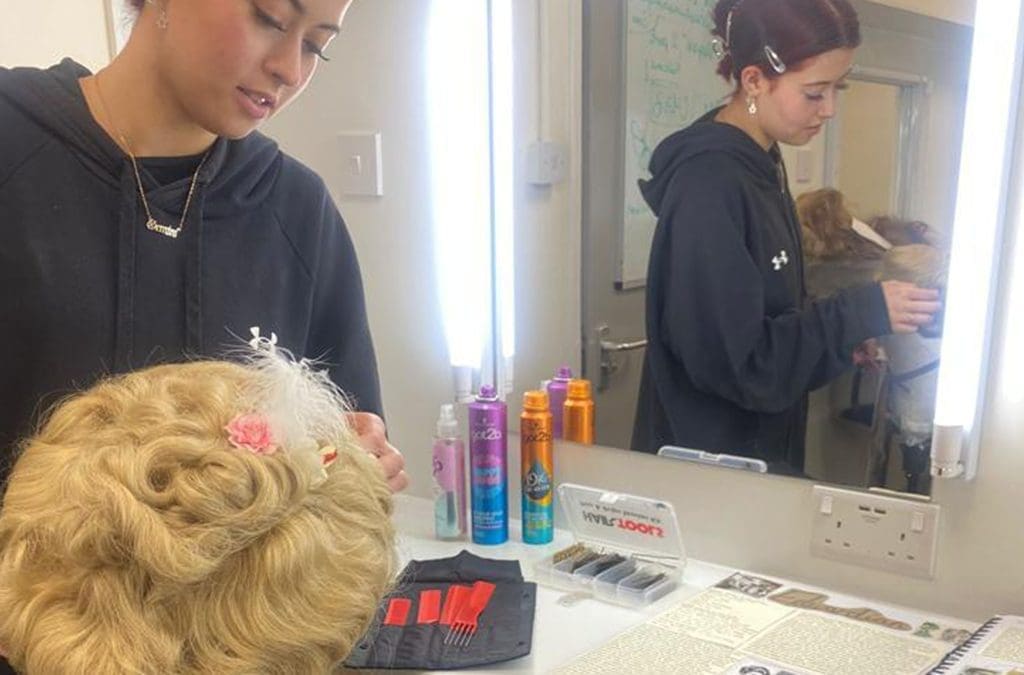
What Is a Career in Theatre and Stage Makeup Like?
If you want to work as a theatre and stage makeup artist, here is what the craft involves and how to train for it. Stage makeup is its own craft, built for distance, strong lighting and an audience that may be a hundred feet away, with no camera to hide behind and no retakes when something slips. It rewards artists who love live performance, work fast under pressure and enjoy building a character rather than simply beautifying a face. This guide covers what the work involves, how it differs from other makeup, where stage artists work and how to train for it.
Want to see how it all works in person? A visit lets you look around the studios and meet the tutors before you commit to anything.
What does a theatre makeup artist actually do?
A stage makeup artist designs and applies the looks that let an audience read a character from their seat, then keeps those looks running night after night. The work runs from subtle corrective makeup that simply survives stage lighting, through bold character and period looks, to ageing, wigs and prosthetics for a full transformation. Alongside the artistry sits a great deal of practical craft, from quick changes in the wings to maintaining continuity across a long run so the character looks the same in week twenty as on opening night.
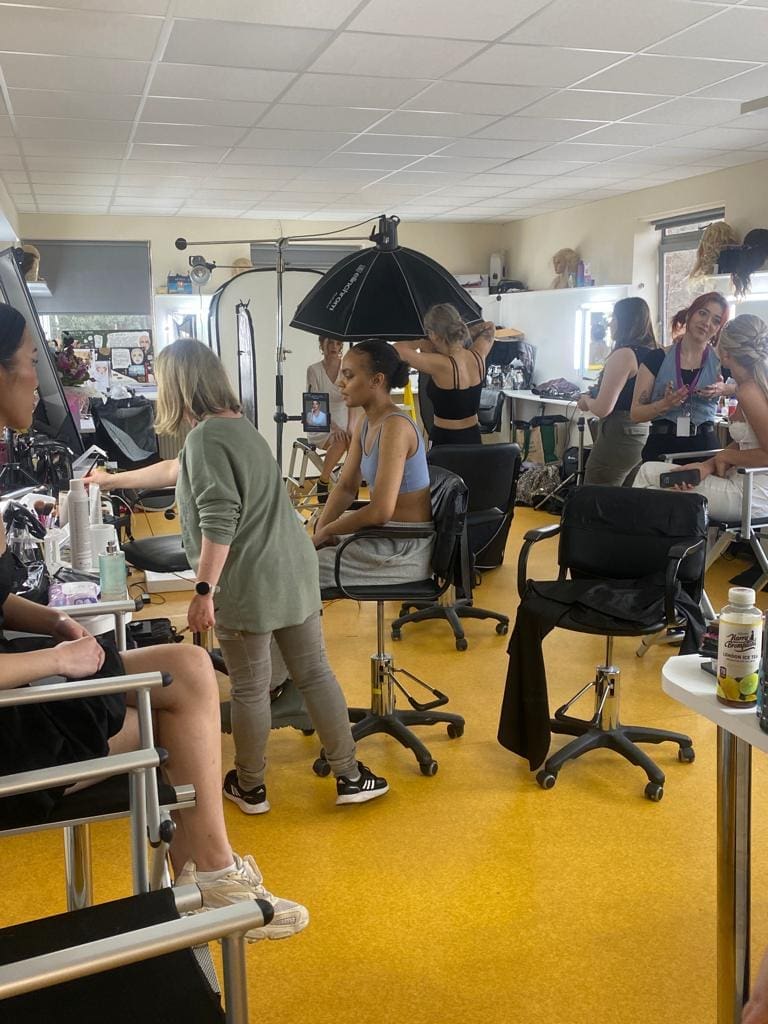
How is stage makeup different from other makeup?
Built for distance and light
The biggest difference is who is looking and from how far. Stage lighting is strong and flattening, and the audience sits at a distance, so makeup has to be bolder and more defined than anything that would suit a camera or a chair. Features are emphasised so they do not vanish under the lights, which is why stage makeup can look heavy up close and read perfectly from row Q.
Bigger, bolder and more durable
A look has to last a whole performance under hot lights, often through sweat, movement and costume changes. That demands products and techniques chosen for staying power as much as appearance, and a way of building a face that holds together for hours rather than minutes. Durability is a craft in itself, and a stage artist thinks about it from the first product down.
Speed and quick changes
Live performance does not wait. Artists work to tight calls before a show and handle lightning fast changes during it, sometimes transforming a performer in the wings in a couple of minutes while the play carries on around them. Calm hands and ruthless organisation matter as much here as artistry, because there is no second take if a change runs late.
Character and ageing
Much of stage work is about becoming someone else. Ageing a young actor, building a period look, suggesting illness or transformation, all rely on shading, texture and sometimes prosthetics to tell the story from a distance. It is closer to acting through makeup than to beautifying, and it is what draws many artists to the stage in the first place.

Where do theatre and stage makeup artists work?
Theatre and the West End
Plays, musicals and long running West End shows are the heart of the work, with resident teams keeping a production looking right across months or years. It is steady, demanding work that rewards reliability and a calm temperament as much as flair.
Opera, ballet and dance
These forms lean heavily on bold, expressive makeup and elaborate character work, often with strong period and stylised elements. They are a natural home for artists who love drama and design and want to push a look further than realism allows.
Touring, rep and live events
Touring productions, repertory theatre and live events offer variety and travel, with new venues, casts and challenges in quick succession. It suits artists who like to keep moving, adapt fast and build a wide network across the live performance world.


What skills do you need for stage makeup?
Stage work asks for a broad toolkit. Strong character and corrective makeup, an understanding of how looks behave under stage lighting, and the speed to deliver them on a tight call are the foundations. Beyond that, hair and wig work, ageing, period looks and basic prosthetics all come into play, which is why screen and stage training so often go together. It also demands real teamwork, since you work shoulder to shoulder with performers, wardrobe and crew, a side of the craft we explore in working in film, television and stage.
Temperament matters too. The performers in your chair may be nervous before a show, the schedule is unforgiving, and problems have to be solved quietly and quickly. A calm, dependable artist who keeps a clear head under pressure is worth a great deal to a production, and that reputation is what keeps the contracts coming.
What is the career and pay like?
Most stage work is freelance or contract based, tied to the run of a production, so income comes in blocks rather than a steady salary. A resident West End show can mean months of reliable work, while touring and events bring variety and travel between contracts. Building a name in the live performance world takes time, but established artists move between productions on reputation, and the work offers something screen rarely does, the energy and immediacy of a live audience every night.
What is it really like backstage?
Backstage during a show is controlled chaos, and the makeup team is part of the machinery that keeps it running. You work to a strict call before curtain up, then stay ready through the performance for touch ups, quick changes and the small emergencies that live theatre always produces. It is a world of tight corridors, low light and split second timing, and it rewards people who stay calm when everyone around them is moving fast.
Quick changes are where the pressure peaks. A performer may come off stage and need to be transformed and back on within a couple of minutes, while the show carries on without them. There is no room for hesitation, so the work has to be rehearsed, organised and almost automatic, with every product laid out exactly where your hand expects it.
The other reality is the length of a run. The same look has to be recreated faithfully night after night, sometimes for months, so consistency matters as much as creativity. Photographs and notes from the first night become the reference that keeps the production looking right in its hundredth performance.
For the right person, none of this is a chore. The energy of live performance, the closeness of the team and the satisfaction of a show that runs perfectly are exactly why stage artists love the work, and why many never want to leave it for the quieter world of screen.
How do you train for theatre and stage makeup?
Stage makeup rewards proper, practical training, because so much of it is about technique under pressure that is hard to pick up alone. Brushstroke has trained makeup artists inside Elstree and Longcross studios for over thirty five years, with stage, screen, character and hair work built into the course rather than treated as extras. The two year diploma and 7 month diploma both cover the breadth a stage career asks for. Come and see the studios to understand how it is taught.
Frequently Asked Questions
What is the difference between stage and screen makeup?
Stage makeup is bolder and built to read from a distance under strong lighting, and it has to last a whole live performance. Screen makeup is far more subtle, built for cameras that catch every detail. Many artists train in both, since the underlying skills overlap.
Do you need qualifications to work in theatre makeup?
There is no legal requirement, but a recognised diploma covering makeup, hair and character work is a real advantage, and productions often expect it. The practical experience and portfolio that come with good training matter just as much.
Is theatre makeup a good career?
For people who love live performance, it can be hugely rewarding, with variety, creativity and the buzz of a live audience. It is mostly freelance and demanding on time, so it suits those who enjoy that rhythm rather than a nine to five.
What skills are most important for stage makeup?
Bold, durable application, character and ageing work, speed under pressure, and the calm to handle quick changes and long runs. Hair and wig skills and good teamwork round out what a production looks for.
Can you move from stage makeup into film and television?
Yes, and many artists work across both. The character, period and prosthetic skills transfer well, though screen demands a lighter, more detailed touch, which is why broad training across stage and screen is so useful. The character and ageing work in particular carries straight across, and many artists move between theatre, film and television over the course of a single career.
How do you become a theatre and stage makeup artist?
You train in core makeup skills to a professional standard, then specialise in the techniques live performance needs, such as ageing, character work and fast changes. Experience tends to come from working on productions, often starting with student, fringe or amateur theatre before moving into larger houses.
What is stage makeup used for?
Stage makeup is built so a face reads clearly to an audience sitting far back and under strong lighting. It covers straight character looks, ageing, fantasy and injury effects, all designed to hold up through a live performance.
Is theatre makeup different from film and television makeup?
Yes. Stage work is bolder and built for distance and bright lighting, while screen makeup is fine and built for high definition close ups. Many artists move between the two once they understand how each medium reads.
Further reading
Working across film, television and stage.
Where makeup training can take your career.
The complete route into professional makeup.
A clear introduction to SFX makeup.