What Goes in a Professional Makeup Artist’s Kit?
A professional kit is not just a bigger version of the makeup bag at home. It is a working toolset, built for every skin tone, every lighting setup and a long day at the chair, and it is assembled with intent rather than collected by accident. This guide walks through what actually goes into a professional makeup artist’s kit, why each part earns its place, and how to build one without spending a fortune before you have earned a penny. It is the difference between arriving at a job ready for whatever sits in the chair and quietly hoping the brief matches the handful of products you happen to own. Whether you are pulling together a full professional makeup kit or a leaner starter kit to begin with, the same thinking applies. Build it well and the kit stops being a worry and becomes one of the things that makes you bookable.
Want to see how it all works in person? A visit lets you look around the studios and meet the tutors before you commit to anything.
What does a professional makeup kit actually need?
The honest answer is range, not volume. A professional needs to create almost any look, on almost any face, in almost any light, which means breadth of shade and finish far more than a drawer full of duplicates. A well built kit is ruthless about what stays in it. Every product has a reason, every shade fills a gap, and anything that does not get used quietly makes way for something that does. The artists with the most impressive kits are rarely the ones with the most products.
Professional makeup kit essentials
If you want a simple professional makeup kit checklist to work from, the essentials come down to this:
- Foundations and concealers across the full depth and undertone range
- Primers, setting powders and colour correctors
- A versatile eyeshadow range, reliable liners, mascaras and a brow kit
- A small palette of buildable lip colours
- A core professional makeup brush kit and clean tools
- Sponges, disposables, a lash kit and a mirror
- A kit bag or case you can work out of at speed

What sits at the core of the kit?
Complexion and base
Base is where most of the work and most of the money sits. You need foundations and concealers across the full depth and undertone range, because you will not get to choose the skin you work on. Add primers, setting powders and a strong set of colour correctors, and you can build a flawless, long wearing base on anyone who sits down. This is the part of the kit that separates a professional from a hobbyist faster than anything else.
Eyes, brows and lips
A versatile eyeshadow range covering mattes and shimmers, a few reliable liners, mascaras and a brow kit that works across hair colours will carry you through most jobs. For lips, a small palette of buildable colours beats a hundred bullets you never reach for. The aim across all of it is mixability, so you can match and adjust on the spot rather than hunting for an exact shade you do not own.
What about brushes and tools?
Brushes worth owning
Good brushes change how your work looks and how fast you can do it. A core professional makeup brush kit of face and eye brushes, kept clean and in good condition, will outperform a cheap set of fifty every time. Buy the best you can afford, look after them, and replace them when they tire rather than hoarding ones that have lost their shape.

The tools around the makeup
Beyond brushes, the unglamorous tools earn their keep. Sponges, spatulas, mixing palettes, disposables, a lash kit, tweezers, a mirror and good lighting all matter. So does a sensible kit bag or case that lets you find things quickly under pressure, because a beautiful kit you cannot work out of is no use on a busy morning.
Hygiene is not optional
Working on other people’s faces makes hygiene a professional responsibility rather than an afterthought. Decanting products, using disposables, sanitising between clients and never double dipping are the habits that protect your clients and your reputation. One skin reaction traced back to a dirty kit can undo a great deal of good work.
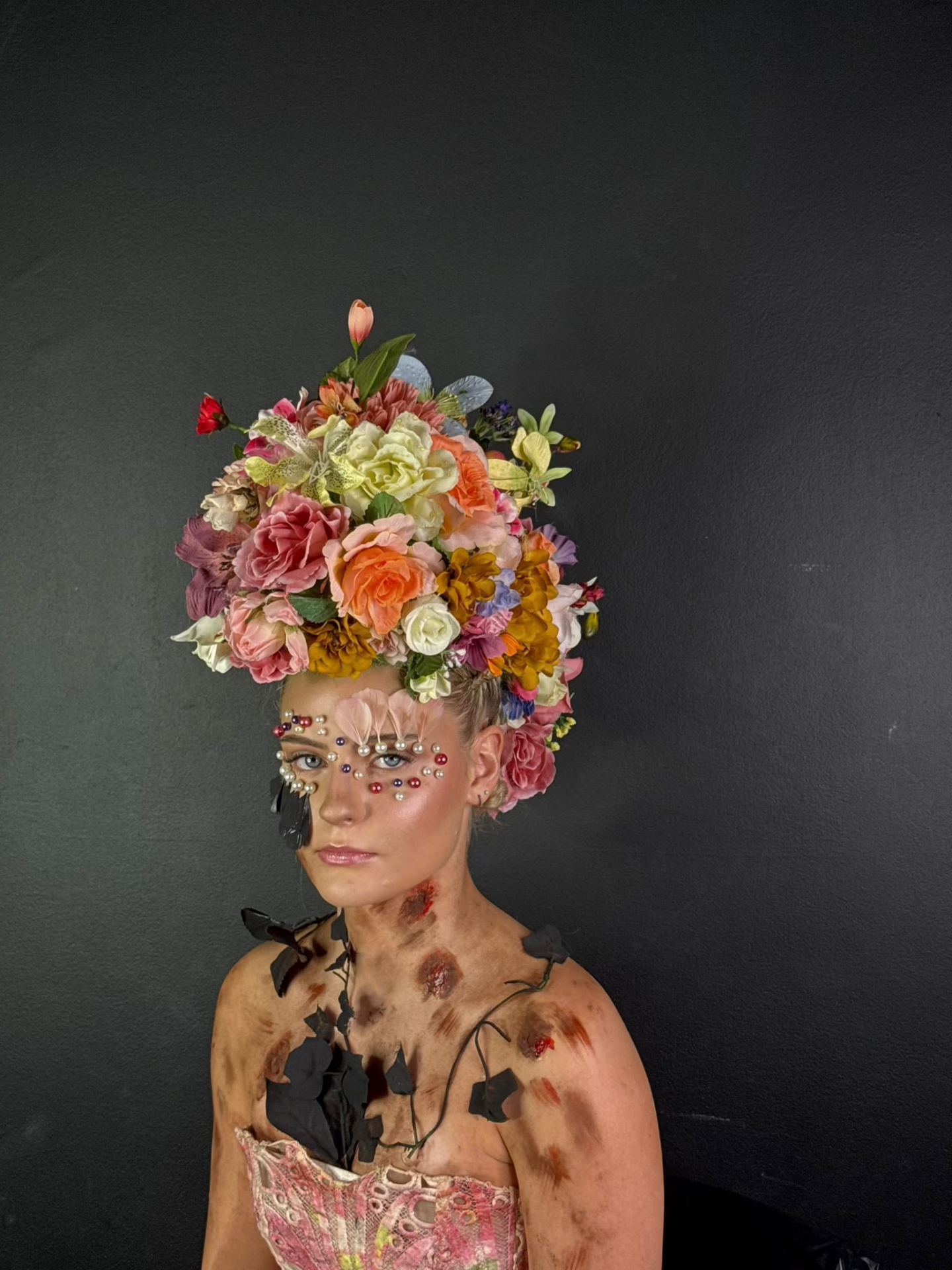
Specialist work needs specialist kit on top of the core. A professional special effects makeup kit, an airbrush setup or period supplies get added as the jobs demand them rather than bought up front. If special effects is the direction you want, our guide to what special effects makeup involves covers the kit that comes with it.

A kit is also an investment, and it lasts far longer when it is maintained. Cleaning brushes properly, storing products correctly and replacing anything past its best keeps everything performing and safe. We go through the whole routine in our guide to looking after your makeup kit.
How do you build a kit without going broke?
You do not buy a professional kit in one go, and you should not try. Start with a strong, flexible base range and a core set of brushes, then add to it job by job as real work tells you what you actually reach for. Buy depth where it matters, like foundation shades, and resist the pull of limited edition palettes that photograph well and sit unused. A kit built this way is cheaper, leaner and far more useful than one bought in a panic before a first booking.
What do the best kits have in common?
Across thousands of working artists, the kits that stand out share a handful of traits, and none of them is about spending the most money. They come down to editing, organisation and a willingness to keep changing.
Edited, not enormous
Look at the kits of artists who work constantly and the first thing you notice is how little waste there is. Every product earns its place, every shade fills a real gap, and anything untouched in months is quietly retired. A great kit is not the most expensive one in the room or the one with the most palettes, it is the one its owner knows inside out and can reach into without looking. Beginners tend to over buy and under use. Professionals do the opposite, carrying less and using all of it.
Organised for speed
Organisation is the cheapest upgrade you can make to a kit and one of the most powerful. A case you can work out of quickly, with products grouped logically and the essentials always in the same place, makes you faster and calmer on every single job. Clients feel that calm even when they could not tell you why, and an artist who stays unhurried and finishes on time is the artist who gets booked again. A chaotic kit, however lovely its contents, fights you all day.
Always evolving
The best kits are never finished. An artist who shoots a lot of editorial builds in a different direction from one who lives in bridal or works mostly on screen, and the kit slowly shapes itself around the work that actually pays. That is why copying someone else’s kit list rarely works for long. The right kit is the one that matches the jobs you really do, refined a little more with every booking until it feels less like a collection of products and more like an extension of your hands.
How is a professional kit different from a personal one?
A personal kit suits one face in one set of lighting. A professional kit has to suit everyone, which is why it is built around range, hygiene and reliability rather than personal favourites. That shift in thinking is part of what training gives you, alongside the technique to use it all well, and it points toward the different careers in makeup a strong kit can open up.
Where does training come in?
Knowing what to buy is only half of it. Knowing how to use a professional kit on any face, in any light, is what you actually get paid for, and that comes from proper training rather than guesswork. Brushstroke has trained makeup artists inside Elstree and Longcross studios for over thirty five years, and the two year diploma and 7 month diploma build the skills and the kit knowledge together. The best way to understand it is to come and see a working kit in use.
Frequently Asked Questions
How much does a professional makeup kit cost?
It varies widely, and you build it over time rather than in one purchase. A solid starter kit focused on base and brushes can be assembled sensibly, then grows as your work pays for it. Spending more does not automatically make a better kit, buying the right things does.
What should be in a beginner makeup artist kit?
Start with a wide range of foundations and concealers, primers, setting powders, colour correctors, a core brush set and the basic tools and disposables. Add the eye, brow and lip products you will genuinely use, then expand as real jobs guide you.
Do makeup artists buy their own kit?
Freelance artists almost always own and fund their own kit, which is part of why it is treated as a long term investment. Some salaried or counter roles supply products, but a professional generally carries their own trusted tools.
How often should you replace makeup in a kit?
Follow the shelf life of each product and replace anything past its best, especially anything used near the eyes. Good storage and hygiene extend the life of a kit, but liquids and creams do not last forever and should be refreshed regularly.
How do you build a professional makeup kit?
You build it job by job rather than in one purchase. Start with a flexible base range and a core professional makeup brush kit, then add to it as real work shows you what you reach for. That is how to start a professional makeup kit without tying up money in products you will not use.
What is in a full professional makeup kit?
A full professional makeup kit covers complexion across every shade and undertone, eyes, brows and lips, a core brush set, the tools and disposables around the makeup, and a kit bag or case to carry it. Range and hygiene matter more than sheer volume.
Is a kit for a bride or a beginner any different?
The essentials are the same. A bridal or freelance artist leans harder on natural, long wearing base work, while a beginner should start lean and grow the kit with each booking. The thinking behind a strong bridal makeup kit is the same as any professional kit.
Where should a makeup artist buy their kit?
Professional brands sell directly and through specialist suppliers, and most artists mix a few high end staples with reliable professional lines for the bulk of the kit. The smart approach is to spend where quality genuinely shows, foundations and brushes above all, and stay relaxed about the products that matter less. Trade accounts and professional discounts are worth setting up once you are working regularly.
Further reading
Keeping your brushes and products clean and hygienic.
How makeup reads differently on screen.
Where makeup training can take your career.
The complete route into professional makeup.